
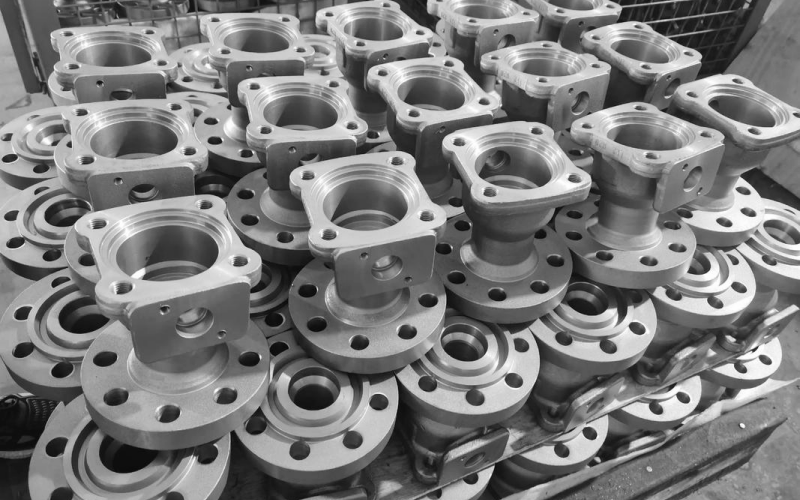
In valve selection, material is one of the most underestimated decision factors. Oversize a valve and the system becomes slightly less efficient; overrate the pressure class and you simply spend a bit more. But choose the wrong material and the consequences can be stress corrosion cracking, hydrogen embrittlement fracture, high-temperature creep failure, or pitting perforation, any of which can shut a plant down.
This article builds a systematic method for valve material selection from the fundamentals of materials science, based on service conditions, to help you establish a clear material decision framework.
The Underlying Logic: Two Core Questions
Before discussing specific materials, establish the basic approach to selecting valve materials:
Question 1: How corrosive is the medium to the material?
Different media behave very differently toward metals:
- Neutral water: carbon steel in neutral water containing dissolved oxygen undergoes uniform corrosion at roughly 0.1 to 0.3 mm/year.
- Water containing Cl–: austenitic stainless steels (304/316) may suffer stress corrosion cracking (SCC) when Cl– concentration exceeds 200 ppm and temperature exceeds 60 °C, one of the most dangerous failure modes. There is no obvious macroscopic warning: cracks propagate internally and the part finally fractures in an instant.
- Dilute sulfuric acid: carbon steel corrodes extremely fast in dilute sulfuric acid, while Hastelloy B series offers excellent resistance.
- High-temperature steam: carbon steel begins to show obvious high-temperature oxidation and creep above 450 °C.
Question 2: Are the mechanical and thermodynamic conditions within the material’s capability?
- Strength: whether the allowable stress of the material at operating temperature satisfies the pressure class requirement.
- Temperature limits: the maximum and minimum service temperatures of the material. For example, 304 stainless steel can be used from -196 °C to 800 °C, but prolonged exposure in the 425 to 860 °C range may cause sensitization, leading to intergranular corrosion.
- Thermal cycling: in services with frequent temperature changes, differences in thermal expansion coefficients between materials can cause fatigue failure.
- Wear resistance: whether media containing solid particles will cause erosive wear.
These two questions intersect to form the basic coordinate system of material selection.
A Map of Common Valve Materials
1. Carbon Steel
Typical grades: WCB (ASTM A216), WCC, A105 (forgings)
Suitable services:
- Neutral or mildly corrosive media
- Temperature range: -29 °C to 425 °C
- Non-corrosive gas, water, steam, oil products
- General industrial piping, HVAC, fire protection
Unsuitable services:
- Aqueous media with Cl– concentration above 50 ppm (pitting risk)
- Wet H2S environments (sulfide stress corrosion cracking risk)
- Temperature above 425 °C (creep strength drops sharply)
- Low temperature below -29 °C (brittle transition risk)
- Strong acids or strong alkalis
Cost level: low (baseline reference)
Typical applications: fire protection systems, circulating water, medium- and low-pressure steam, non-corrosive oil products.
2. Low-Temperature Carbon Steel
Typical grades: LCB (ASTM A352), LCC
Suitable services:
- Temperature range: -46 °C to 340 °C
- Cryogenic liquefied gases
- Where corrosion resistance is not required
Unsuitable services: corrosive media.
Typical applications: LNG storage tanks and piping, cryogenic separation units, ethylene plants.
3. Cr-Mo Alloy Steel
Typical grades: WC6 (1¼Cr-½Mo), WC9 (2¼Cr-1Mo), F11, F22, F91 (9Cr-1Mo-V)
Suitable services:
- High temperature and high pressure (425 °C to 620 °C)
- Steam, high-temperature oil products
- Power plant boilers, refinery units
Selection notes:
- WC6/F11: suitable for medium-high temperature services of 450 to 540 °C
- WC9/F22: suitable for high-temperature services of 500 to 590 °C; at 550 °C the tensile strength is about 1.5 times that of WCB
- F91: suitable for ultra-high-temperature services of 570 to 620 °C, with excellent high-temperature creep strength and steam-oxidation resistance
Cost level: medium-high (about 2 to 4 times WCB)
Typical applications: main steam piping of ultra-supercritical power plants, high-temperature oil and gas lines in FCC units, hydrotreating units.
4. Austenitic Stainless Steel
Typical grades: CF8 (304), CF8M (316), CF3 (304L), CF3M (316L)
Suitable services:
- Highly corrosive media
- Temperature range: -196 °C to 800 °C (but note sensitization risk in the 425 to 860 °C band)
- Food, pharmaceutical, chemical, seawater
304 vs 316 selection logic: 316 contains about 2 to 3 percent more molybdenum (Mo) than 304. Molybdenum significantly improves resistance in reducing media (such as dilute sulfuric acid and phosphoric acid) and in Cl– environments.
| Service condition | Recommended material |
|---|---|
| Neutral water, general chemical media | 304 |
| Cl– concentration 200 to 1000 ppm | 316 |
| Cl– concentration > 1000 ppm | 316L or duplex stainless steel |
| Dilute sulfuric acid (<20%) | 316 |
| Food, pharmaceutical (higher corrosion allowance needed) | 316L |
Why the L grades (304L/316L): the L (Low Carbon, carbon content ≤0.03%) grades reduce the risk of intergranular corrosion. During welding, the heat-affected zone of low-carbon stainless steel is far less prone to chromium carbide precipitation, preserving corrosion resistance. Stainless steel valves that require welding should preferentially use L grades.
Cost level: medium (CF8M about 2 to 3 times WCB)
Typical applications: chemical piping, water treatment, food processing, pharmaceutical equipment, LNG plants.
5. Duplex Stainless Steel
Typical grades: 2205 (S31803/S32205), 2507 (S32750)
Suitable services:
- High-Cl– environments (seawater, brine)
- Temperature range: -50 °C to 300 °C
- Services with high stress corrosion cracking risk
2205 vs 2507:
- 2205 (the workhorse of duplex steels): PRE value ≥35, pitting and SCC resistance superior to 316L, strength about twice that of 316L
- 2507 (super duplex): PRE value ≥40, performs even better in extreme Cl– environments
Core advantage of duplex steel: it combines the toughness of austenitic stainless steel with the high strength of ferritic stainless steel, and its SCC resistance in Cl– environments far exceeds that of 304/316.
Cost level: medium-high (about 3 to 5 times WCB)
Typical applications: seawater desalination, offshore platforms, Cl–-containing media in chemical plants, desulfurization slurry valves.
6. Nickel-Based Alloys
Typical grades: Hastelloy C-276 (N10276), Hastelloy B (N10665), Inconel 625 (N06625), Monel 400 (N04400)
Suitable services:
- Extreme corrosive environments
- High-temperature oxidation and corrosion
- High-purity pharmaceutical production (control of metal ion release)
Where each grade excels:
| Grade | Strongest services | Temperature limit |
|---|---|---|
| Hastelloy C-276 | Wet Cl2, hypochlorite, strong oxidizing acids | about 540 °C |
| Hastelloy B | Hydrochloric acid (all concentrations and temperatures) | about 260 °C |
| Inconel 625 | High-temperature oxidation, seawater, nitric acid | about 980 °C |
| Monel 400 | Hydrofluoric acid (HF), seawater, alkalis | about 540 °C |
Cost level: extremely high (10 to 20 times WCB or more)
Typical applications: flue gas desulfurization (FGD) systems, extreme corrosive media in chemical plants, high-purity pharmaceutical systems.
A Decision Tree for Material Selection by Service Conditions
Step 1: Determine the temperature
Temperature is the first filter in valve material selection, because it determines which material families can be used at all.
| Temperature range | Usable material families | Excluded materials |
|---|---|---|
| < -46 °C | Austenitic stainless steel, nickel-based alloys, aluminum alloys | Carbon steel (brittle fracture) |
| -46 °C ~ -29 °C | Low-temperature carbon steel (LCB/LCC), austenitic stainless steel | Plain carbon steel (WCB) |
| -29 °C ~ 340 °C | Carbon steel, stainless steel, duplex stainless steel | N/A |
| 340 °C ~ 425 °C | Cr-Mo steel (WCB near its limit) | Carbon steel (creep becomes significant) |
| 425 °C ~ 590 °C | Cr-Mo steel (WC6/WC9/F22) | Austenitic stainless steel (sensitization band, use with caution) |
| 590 °C ~ 620 °C | F91 (9Cr-1Mo-V) | WC6/WC9 |
| > 620 °C | Inconel 625 and other nickel-based high-temperature alloys | Cr-Mo steel |
Step 2: Determine medium corrosivity
Within the candidate materials that passed the temperature filter, apply a second filter based on medium corrosivity.
Quick reference for common media:
| Medium | Temperature | Recommended | Not recommended |
|---|---|---|---|
| Tap water / circulating water | ambient ~80 °C | WCB / 304 | N/A |
| Water with Cl– (<200 ppm) | < 60 °C | 316L | 304 (SCC risk) |
| Water with Cl– (200 to 1000 ppm) | < 60 °C | 2205 duplex | 316L (SCC risk) |
| Seawater | ambient | 2507 / nickel-based | 316 (pitting + SCC) |
| Dilute sulfuric acid (<20%, reagent grade) | ambient ~100 °C | Hastelloy B | 304/316 |
| Concentrated sulfuric acid (>93%, reagent grade) | ambient | Carbon steel (passive film protection) | 304/316 |
| Hydrochloric acid (any concentration) | ambient | Hastelloy B | Stainless steel (not applicable) |
| Hydrofluoric acid (HF) | ambient ~100 °C | Monel 400 | Stainless steel |
| Phosphoric acid (industrial grade) | ambient | 316L | N/A |
| Sodium hydroxide (NaOH) | < 80 °C | 316 / Inconel | Aluminum, copper alloys |
| Dry Cl2 | ambient | Carbon steel | Stainless steel (fire risk) |
| Wet Cl2 | ambient | Hastelloy C-276 | All stainless steels |
| High-temperature steam (<450 °C) | N/A | WCB / WC6 | N/A |
| High-temperature steam (450 to 590 °C) | N/A | WC9 / F22 | WCB |
| High-temperature steam (>590 °C) | N/A | F91 | WC6/WC9 |
Step 3: Confirm mechanical and process requirements
After the material direction is set, confirm that the following process requirements are met:
- Welding: valves requiring welding should preferentially use L-grade stainless steel (304L/316L) or low-carbon Cr-Mo steel.
- Wear resistance: for media containing solid particles, choose harder materials or hard-face the sealing surfaces (Stellite, tungsten carbide, ceramic coatings).
- Hydrogen resistance: for hydrogen service, use hydrogen-embrittlement-resistant materials (austenitic stainless steel, 316L, aluminum alloys); carbon steel and Cr-Mo steel in high-temperature/high-pressure hydrogen must be checked against the Nelson curves.
- Sulfide stress corrosion cracking resistance: for wet H2S environments, use materials qualified under NACE MR0175 / ISO 15156 (heat-treated carbon steel with hardness control, duplex stainless steel, nickel-based alloys).
- FDA / pharmaceutical: for pharmaceutical contact, use electro-polished 316L with dedicated sealing materials (compliant with USP <87>/<88>/<661>).
Typical Material Selection Cases
Case 1: Medium-Pressure Steam (4 MPa, 400 °C)
- Temperature filter: 400 °C. Carbon steel is still usable, though near its limit, while Cr-Mo steel is safer.
- Medium conditions: clean steam, non-corrosive.
- Recommended: body WCB (ASTM A216). At 400 °C the allowable stress of WCB is about 83 MPa, sufficient and economical for a 4 MPa / Class 300 application.
- Alternative: if higher reliability and safety margin are required, upgrade to WC6 (1¼Cr-½Mo) with better high-temperature creep performance.
Case 2: Cooling Water with Chlorides (500 ppm Cl–, 60 °C, 1.0 MPa)
- Temperature filter: 60 °C. Stainless steel is applicable here.
- Medium conditions: medium Cl– concentration, in which 316L faces SCC risk and duplex stainless steel is safer.
- Recommended: 2205 duplex stainless steel (25% Cr + 5% Ni + 3% Mo + 0.15% N), PRE ≥35, resistant to pitting and SCC.
- Not recommended: 304 (SCC virtually certain), 316L (SCC may occur in the weld heat-affected zone).
Case 3: FGD Slurry (15% solids, pH 4 to 6, 60 °C)
- Temperature filter: 60 °C. Multiple material families remain usable.
- Medium conditions: dilute sulfurous and sulfuric acids with solid particles (fly ash, gypsum crystals), a combination of corrosion and erosion.
- Recommended: 2507 super duplex body (Cl–– and acid-resistant) lined with natural hard rubber (NR), disc 2507 or higher.
- Economical alternative: WCB body lined with hard rubber, 316L disc lined with rubber.
Case 4: LNG Cryogenic Piping (-162 °C, 1.5 MPa)
- Temperature filter: -162 °C. Carbon steel is prohibited because of brittle fracture risk, and low-temperature carbon steel LCB, limited to -46 °C, does not apply either.
- Recommended: CF8M (316L austenitic stainless steel). Austenitic stainless steel actually gains toughness at low temperatures, which is why it is the standard choice for cryogenic service.
- Sealing materials: cryogenic-grade PTFE (modified to prevent low-temperature embrittlement) or PEEK.
- Special requirement: the bonnet must be designed as an extended-neck bonnet so that the packing area stays away from the cold zone, preventing packing icing.
Common Misconceptions in Material Selection
Misconception 1: “Stainless steel is all-purpose and better than carbon steel”
Stainless steel is not an “upgraded carbon steel.” In some services it is actually worse than carbon steel:
- In reducing media (reducing acids, oxygen-free environments), the passive film cannot form, and the corrosion rate may be higher than carbon steel.
- In dry Cl2, carbon steel can be used under certain conditions, while stainless steel carries a risk of violent combustion.
- At high temperature, the sensitization problem of stainless steel must be considered.
Misconception 2: “316 is definitely better than 304”
316 does outperform 304 in Cl– environments, but in some services the difference is not what you might expect:
- In strongly oxidizing environments (e.g. concentrated nitric acid), 304 is actually more corrosion-resistant than 316.
- When Cl– exceeds 1000 ppm, 316 also suffers SCC; what you need then is duplex stainless steel, not 316.
Misconception 3: “Same grade means same quality”
Correct material grade does not equal correct quality. Even for the same stainless steel grade, impurity control, casting/forging practice and heat treatment can differ dramatically between manufacturers; corrosion resistance can vary by more than a factor of two.
A fact that is easy to overlook: chemical composition compliance does not guarantee that the material’s actual corrosion performance is qualified. The same 316L, properly solution-treated (1050 to 1100 °C water quench) and acid-washed/passivated, can show pitting potentials more than 200 mV higher than material without proper heat treatment.
This is also why, in high-end applications, customers require not only material certificates but also PMI (Positive Material Identification) reports and corrosion test data for the specific service.
Closing Thoughts: The Essence of Material Selection
In valve material selection there is an unavoidable trade-off:
- Over-specify: material cost rises sharply: F91 costs 3 to 5 times WCB, and Hastelloy costs 5 to 10 times 316L.
- Under-specify: material does not match the service: at best premature replacement, at worst plant shutdown and safety incidents.
For project decision-makers, truly professional material selection is neither the most expensive choice nor the cheapest one, but the material that delivers the best economic result without compromising safety, based on a full understanding of the service data.
That optimal point depends on three factors:
- Completeness and accuracy of service data (pressure, temperature, medium composition, impurity content, operating mode)
- Depth of understanding of material failure modes under those conditions (knowing the most likely failure and preventing it proactively)
- Consideration of whole-lifecycle cost (not just valve purchase price, but also maintenance, downtime losses and replacement cost)
Of the three, the first comes from collecting data, the second from professional knowledge, and the third from decision experience. Combined, they produce reliable valve material selection.
A Special Note on Control Valves
While the material logic above applies to all valve types, control valves demand a few additional considerations. In a control valve, the trim (plug, seat and cage), not the body, is the true heart of the valve and often needs surface hardening or special materials (Stellite hard-facing, tungsten carbide, ceramic coatings). High differential pressure at partial stroke can cause cavitation and flashing, and throttling flow at high velocity accelerates erosive wear far beyond what an on-off valve experiences. These factors directly determine control valve service life in high-pressure-drop or abrasive service, so trim material selection should always be reviewed together with body material selection.
 No products in the cart.