
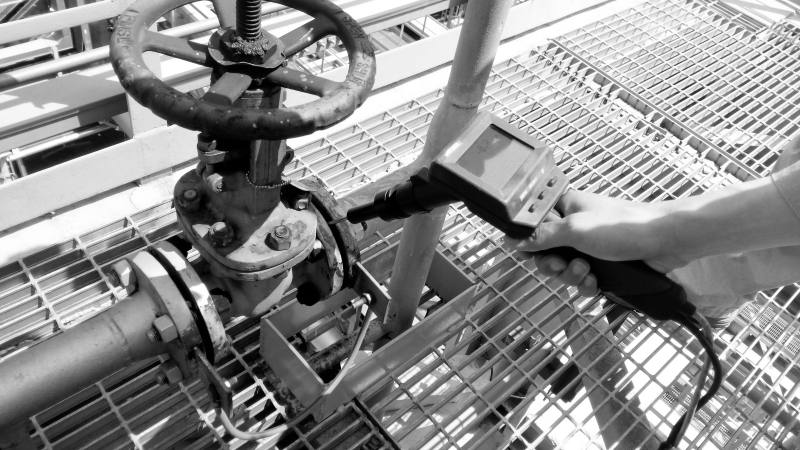
The leakage class of a control valve sets the maximum leakage allowed past the plug and seat when the valve is closed. Standards such as FCI 70-2, ANSI B16.104 and IEC 60534-4 define six classes, I to VI, with increasingly tight limits. The right class is a balance between shut-off requirements, the media and cost.
The Six Classes
The classes, from least to most demanding: Class I is by design, with no factory leakage test required. Class II allows leakage of at most 0.5 % of rated valve capacity. Class III tightens that to 0.1 %. Class IV, at 0.01 % of rated capacity, is the working standard for metal-seated control valves. Class V limits leakage to 5 × 10⁻⁴ ml/min per inch of port diameter per psi differential, for very tight shut-off of liquids and high-pressure gases. Class VI is the soft-seat, bubble-tight level, where leakage is limited to a maximum number of bubbles per minute.
Hard-Seat vs Soft-Seat
Metal-to-metal seating covers Classes II through V. It is durable, tolerates high temperature and stands up to particulate media and erosion, which is why Class IV metal-seat construction is the default for throttling valves. Soft seating, a plug with a PTFE, PPL or similar insert mating against a metal seat, reaches Class VI bubble-tight shut-off. The cost is a lower temperature limit and vulnerability to particles and flashing media. So the choice comes down to how much tight shut-off matters, the operating temperature and how clean the media is.
How to Choose
A few rules of thumb cover most cases. General throttling with moderate shut-off: Class IV, the standard metal-seat choice. Tight shut-off, where isolation matters or media loss is unacceptable: Class VI soft seat, if temperature and media allow. High-pressure liquid or gas with very tight shut-off: Class V, with lapped metal seats. High temperature or particulate media: metal seat (Class IV), since soft seals will not last.
NW VALVE Product Reference
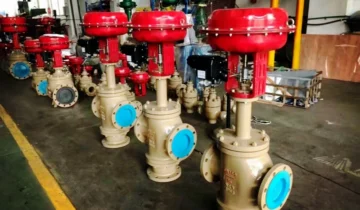
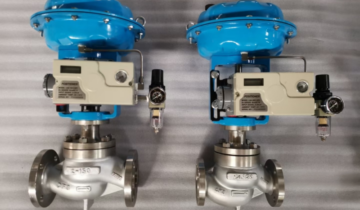
NW VALVE control valves are typically rated Class IV with metal seats, which works out to leakage of 0.01 % of rated capacity expressed in L/h, with Class VI soft-seat options for tight-shut-off duties. Soft-seated and PTFE-lined models provide leakage below Class IV or bubble-tight performance where the application needs it.
Summary Table
| Class | Leakage Limit | Seat Type | Typical Use |
|---|---|---|---|
| I | By design; no test required | Any | Non-critical service |
| II | ≤ 0.5 % of rated capacity | Metal | General service |
| III | ≤ 0.1 % of rated capacity | Metal | Improved shut-off |
| IV | ≤ 0.01 % of rated capacity | Metal | Industrial standard for control valves |
| V | ≤ 5 × 10⁻⁴ ml/min·in·psi | Metal (lapped) | Tight shut-off; high pressure |
| VI | Bubble-tight (bubbles/min) | Soft seat | Tight shut-off; clean media |
Conclusion
Match the class to the duty. Class IV is the working standard for metal-seated valves; choose Class VI soft seat when bubble-tight shut-off matters and the media allows; choose Class V for high-pressure tight shut-off. When specifying, confirm the standard, the test medium and the test conditions.
 No products in the cart.