
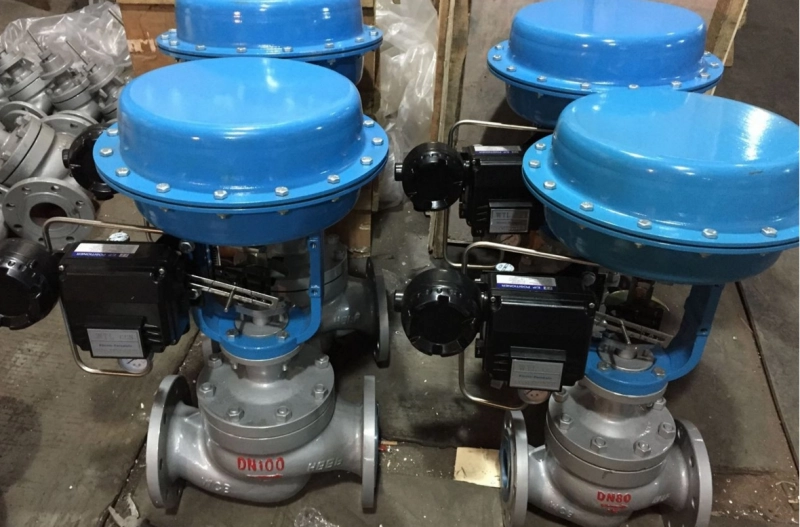
The complete structure of a pneumatic control valve comprises the internal throttling parts, known as the trim and including the plug, seat, cage and seals, together with the valve body that houses them and the actuator that drives the plug. The main components are as follows:
Valve Body
The valve body is one of the main components of the valve, usually made of metallic materials (such as cast iron, carbon steel or stainless steel). It houses the internal parts of the valve and connects the piping.
Valve Plug
The plug is the key component that controls the flow of the media, usually made of metallic materials such as stainless steel or copper alloy. The plug is connected to the actuator through the valve stem and moves up and down to regulate the media flow.
Valve Seat
The seat is the sealing surface of the plug and is usually attached to the valve body, forming the sealing structure of the valve. The seat is usually made of wear-resistant and corrosion-resistant materials, such as stainless steel or PTFE.
Valve Cage
The cage is the structure surrounding the plug, used to guide the fluid through the valve and improve the control performance and stability of the valve. The cage is usually a chamber structure, designed as required.
Seals
Seals ensure the sealing performance of the valve and are usually located between the plug and the seat. Seals are usually made of elastic materials, such as rubber or PTFE.
Actuator
The actuator is the component used to control the opening and closing of the valve. It can be a pneumatic actuator, an electric actuator or a manual operating device. The actuator is usually connected to the plug through the valve stem and controls the plug position by moving up and down.
The components described above form the common structure of a pneumatic control valve. The specific structural design and material selection vary with the valve type, working conditions and control requirements. When selecting and applying a pneumatic control valve, the valve structure and materials should be chosen according to the engineering requirements and system needs, to ensure stable and reliable operation.
 No products in the cart.