
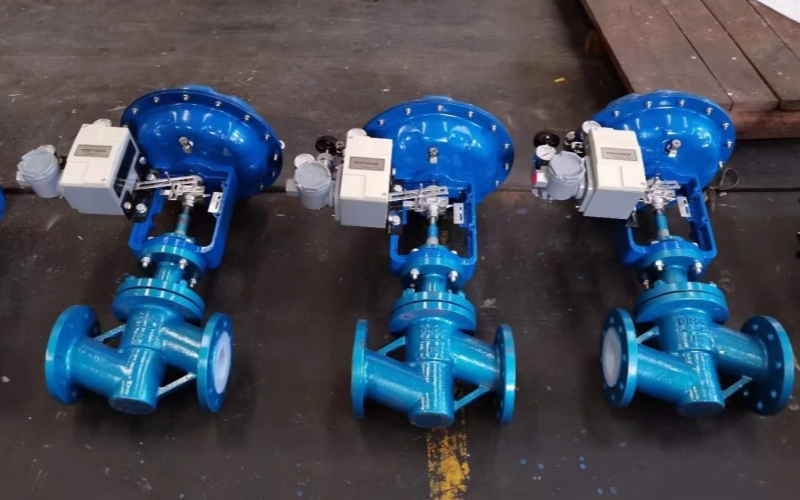
The performance and reliability of a pneumatic control valve depend on a few key components of its actuator: the diaphragm that converts the pneumatic signal into mechanical motion, the diaphragm cover that protects and connects the diaphragm, and the packing that seals the valve stem. Understanding these three components helps with valve selection, commissioning and troubleshooting.
The Role of the Diaphragm
The diaphragm is one of the important components of the actuator (pneumatic actuator) of a pneumatic control valve. It plays the key role of converting the pneumatic signal into mechanical motion. The main functions of the diaphragm are as follows:
- Transmitting the pneumatic signal: the diaphragm is the power transmission element in the actuator. It receives the pneumatic signal from the control system and converts it into mechanical motion. When the pneumatic signal changes, the diaphragm produces a corresponding displacement, driving the valve to open or close.
- Controlling valve motion: the deformation of the diaphragm acts on the actuator stem or plug, thereby controlling the opening and closing of the valve. By adjusting the diaphragm tension or the magnitude of the pneumatic signal, the valve position and flow can be precisely controlled, achieving regulation of the media flow.
- Providing sealing performance: the diaphragm usually forms a seal with the bonnet and body of the valve, ensuring the sealing performance of the valve. When pneumatic pressure acts on the diaphragm, it forms a seal with the bonnet or body, preventing media leakage.
- Adapting to media changes: the diaphragm is usually made of soft elastic materials, which can adapt to changes in media temperature and pressure, maintaining good sealing performance and working stability.
In general, the diaphragm of a pneumatic control valve plays the role of converting the pneumatic signal into mechanical motion while providing sealing performance, ensuring the normal operation and reliability of the valve.
The Role of the Diaphragm Cover
The diaphragm cover is a key component of the pneumatic actuator, usually located at the top of the actuator, covering the diaphragm. Its main functions are as follows:
- Protecting the diaphragm: the cover protects the diaphragm, preventing external objects, dust or dirt from entering the actuator, and keeping the diaphragm clean and intact. This helps extend the service life of the diaphragm and ensures the normal operation of the actuator.
- Fixing the diaphragm: fixed to the top of the actuator, the cover keeps the diaphragm position stable. This ensures that the diaphragm correctly receives the pneumatic signal from the control system and converts it into the corresponding mechanical motion to achieve valve control.
- Connecting the stem or plug: the cover is usually connected to the actuator stem or plug, transmitting the deformation movement of the diaphragm. When the pneumatic signal acts on the diaphragm, the diaphragm deforms and transmits the movement through the cover to the stem or plug, driving the valve to open or close.
- Providing sealing performance: the cover forms a seal with the actuator body or bonnet, preventing media leakage. Good sealing at the connection between the cover and the actuator is crucial to the normal operation of the valve.
In summary, the diaphragm cover plays an important role in the actuator: it protects, fixes and connects the diaphragm while providing sealing performance, ensuring the normal operation and reliability of the valve.
The Role of Packing
Packing is a sealing element used at the stem-to-body interface to prevent media leakage. In pneumatic control valves, the stem sealing arrangement depends on the design: most conventional control valves use packing, typically V-type PTFE or graphite packing at the bonnet, to seal the valve stem. The sealing between the plug and the seat, on the other hand, is provided separately by elastic sealing rings or soft sealing materials.
Packing is also widely used in other valve types, such as gate valves and plug valves, whose stems require a static seal against the body. The role of the packing is to maintain a seal between the stem and the body while the stem moves, preventing media leakage.
In summary, whether a pneumatic control valve uses packing depends on its stem sealing design: conventional designs use V-type PTFE or graphite packing, while special designs such as bellows-seal valves can replace the packing with a bellows to meet strict leakage requirements. In all cases, the sealing between the plug and the seat is provided separately by elastic sealing rings or soft sealing materials.
Conclusion
In summary, the diaphragm, the diaphragm cover and the packing jointly ensure the motion conversion, connection and sealing of a pneumatic control valve actuator. A clear understanding of these three components helps select the right valve, commission it correctly and diagnose field problems.
 No products in the cart.